Long before modern medicine, ancient cultures understood something profound about sound: it has the power to heal. From the chanting of Sanskrit mantras in India to the ceremonial drums of Native Americans, every major civilization developed sophisticated practices using sound for healing the mind, body, and spirit.
The Universal Language of Healing Sound
What's remarkable about sound healing is its universality. Cultures separated by oceans and millennia, with no way to communicate, independently discovered that specific sounds could alter consciousness, reduce pain, and promote wellbeing. This convergent evolution suggests something fundamental about the relationship between sound and the human body.
Ancient Egypt: Vowel Sound Healing
The ancient Egyptians used vowel sounds in their healing temples. Priests were trained to use specific vocal tones to resonate different parts of the body. The temples themselves were designed acoustically to amplify and direct sound for healing purposes.
Hieroglyphic texts describe "healing chambers" where the sick would lie while priests chanted. The Egyptians believed that disease was caused by spiritual imbalance, and sound could restore harmony to the body's energy field.
Ancient Greece: Music as Medicine
Pythagoras, the Greek philosopher and mathematician, is credited with discovering the mathematical ratios underlying musical harmony. But he also used music therapeutically, prescribing specific melodies and modes to treat psychological conditions.
The Greeks believed that different musical modes affected the soul in different ways:
- Dorian mode: Promoted courage and strength
- Phrygian mode: Inspired enthusiasm and passion
- Lydian mode: Created a relaxed, soft emotional state
Aristotle wrote about music's power to create catharsis - emotional purging that promotes psychological healing.
India: The Science of Mantra
The Vedic tradition of India developed perhaps the most sophisticated understanding of sound healing. The concept of "Nada Brahma" - "the universe is sound" - forms the foundation of this understanding.
Mantras and Vibration
Sanskrit mantras were carefully constructed to create specific vibrational effects. The sacred syllable "Om" (or "Aum") is believed to represent the fundamental vibration of the universe itself.
Raga Therapy
Indian classical music uses ragas - melodic frameworks associated with specific times of day, seasons, and emotional states. Certain ragas were prescribed for healing particular conditions, a practice that continues today in Nada Yoga.
Tibet: Singing Bowls and Overtone Chanting
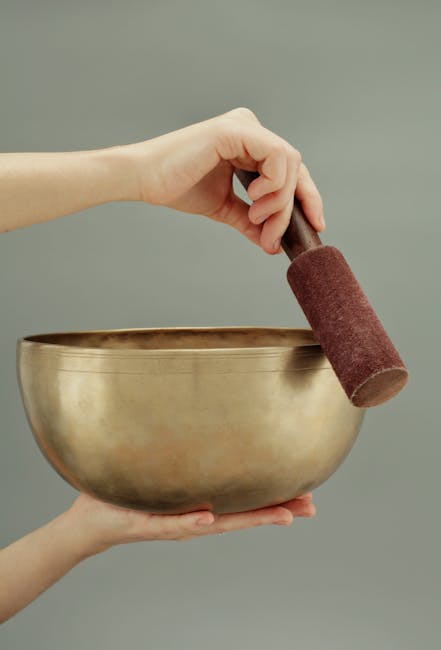
Tibetan singing bowls, made from an alloy of seven metals, have been used for centuries in meditation and healing. When struck or rubbed with a mallet, they produce complex overtones that can induce deep meditative states.
Tibetan monks also developed overtone chanting - the ability to produce multiple pitches simultaneously from a single voice. This creates rich harmonic textures believed to align the chakras and clear energetic blockages.
Medieval Europe: Gregorian Chants
The Gregorian chants of medieval Catholic monks weren't just beautiful - they were healing. These sacred songs used specific modes and intervals that promoted states of peace and spiritual connection.
Interestingly, when the Catholic Church reformed these chants in the 1960s, changing the original frequencies, some historians suggest there was a corresponding decline in the wellbeing of monks who practiced them daily. The original Solfeggio frequencies are said to have been lost until their rediscovery in the 1970s.
Native American Traditions
Native American healing ceremonies often center on drumming, chanting, and the use of rattles. The steady beat of the drum, typically around 4-8 beats per second, induces theta brainwave states associated with visionary experience and healing.
Each tribe developed its own healing songs, passed down through generations. The songs were believed to call in spiritual help and restore the patient's harmony with nature.
Australian Aboriginal Didgeridoo
The didgeridoo, one of the world's oldest instruments, has been used by Aboriginal Australians for over 40,000 years. The deep, resonant drone is used in healing ceremonies and is believed to connect players and listeners to the "Dreamtime" - the spiritual realm of creation.
Modern research has found that playing the didgeridoo can help with sleep apnea and respiratory conditions due to its effects on the airways and breathing patterns.
Modern Sound Healing
Today, we're witnessing a renaissance of interest in sound healing, now supported by scientific research. Modern practitioners use:
- Crystal singing bowls tuned to specific frequencies
- Tuning forks for acupuncture point stimulation
- Gong baths for deep relaxation
- Binaural beats and isochronic tones
- Voice analysis and toning therapy
The Wisdom Continues
At Tranquir, we're honored to continue this ancient tradition using modern technology. Our app generates pure healing frequencies with mathematical precision, while our guided journeys draw on the wisdom of traditions from around the world.
The ancients knew what modern science is now confirming: sound is medicine for the soul.
Experience Ancient Wisdom
Download Tranquir free on the App Store to explore healing frequencies rooted in traditions spanning millennia.